Lingual Braces Are a Discreet Teeth Straightening Treatment
Lingual braces are a far less common method that is used in orthodontics to straighten teeth that need attention. Orthodontists do not recommend lingual braces nearly as often for various reasons; nonetheless, they are a promising treatment method that can correct imperfections. Additionally, they offer some benefits that other teeth straightening methods do not. Continue reading to find out more.
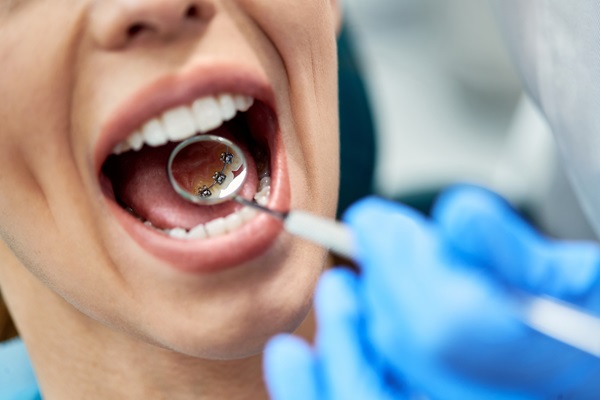
Before understanding how the actual treatment process works, it is first necessary to know exactly what lingual braces are. Unliike traditional braces or clear aligners, this approach is one that puts the brackets and wires on the under or back side of the teeth, instead of the front.
A quick guide to lingual braces
Below is a short overview of what lingual braces are and what is involved in the treatment process. This information is worth reviewing when looking into all of the available options for teeth straightening.
The treatment process
Lingual braces are administered in a very similar way as other forms of braces. However, what is different is the placement. Impressions are taken similarly, but with more focus on the back or underside of the teeth. A dental lab is responsible for custom-creating each bracket, which can be larger or smaller than the average traditional bracket. After the brackets have been created, the patient will return to the orthodontist for the placement part, which will also involve the insertion of wires. Again, because lingual braces are placed on the back of the teeth, this step may take more time to actually complete.
Benefits
One of the main benefits of lingual braces is that they are not visible to the average person. They are a discreet method of treatment that allows individuals to be at social events or have photos taken without fear of having a mouth full of metal. Because lingual braces are very customizable, they also offer an additional benefit of being effective when it comes to correcting over, under, or crossbites that are abnormal.
What else to know
When it comes to lingual braces for teeth straightening, it is important to understand that there may be more discomfort, and a lot more time is required to adjust. With any type of orthodontic treatment, there is a period where the patient has to get used to their new braces or aligners. However, with lingual braces, the tongue and soft tissues of the mouth may rub easier, which will require a period of adjustment.
Talk to an orthodontist today
When considering any type of teeth straightening treatment, it is key to consult with an orthodontist first and foremost. Not every person is a good candidate for every type of treatment, which means the orthodontist will have to perform an evaluation to make the correct determination. In the case of lingual braces, additional evaluations might be necessary because the approach is a little bit more complex. To find out more about lingual braces or to get scheduled for an appointment with the orthodontist, reach out today.
Request an appointment here: https://www.emanuelorthodontics.com or call Michael Emanuel DDS PLLC at (718) 635-4822 for an appointment in our Brooklyn office.
Check out what others are saying about our services on Yelp: Read our Yelp reviews.
Related Posts
Having an orthodontist treat your teeth can be a long and sometimes difficult journey, but seeing the result of a perfect smile is worth it. But after your braces are removed, it is important to remember that your teeth care does not end there. To ensure that your new smile stays healthy and beautiful, a…
After orthodontic treatment, retainers keep teeth from drifting back toward their original positions. A fixed retainer is a thin wire bonded behind the front teeth, usually canine to canine. Because it stays in place, it provides continuous support for alignment, especially in areas that have crowding or spacing. Patients brush carefully around the wire and…
Crossbite treatment can help correct a bite problem in which the upper and lower teeth do not meet properly. A crossbite occurs when one or more upper teeth fit inside the lower teeth when the mouth closes. This bite concern may involve front teeth, back teeth, or both. A dentist can evaluate the bite, explain…
Malocclusion or misalignment of teeth can severely impact your overall oral health and self-esteem. Many people opt for treatments to address various misalignment issues. Teeth straightening treatments have become more efficient and cost-effective over the years.Here are a few teeth straightening options you might want to consider if you are interested in straightening your smile: Clear…